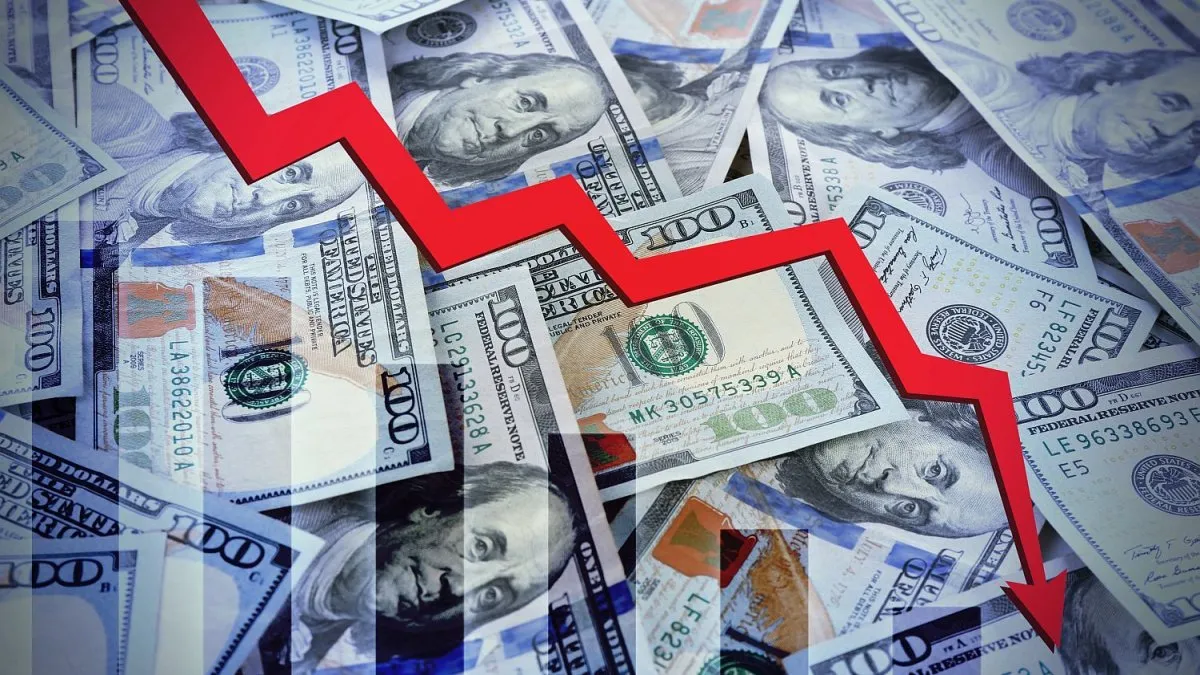
This combination gives the government breathing room and helps maintain exchange rate calm, although beneath that photo, an old Argentine fragility still beats: a falling or lagging dollar while internal prices don't fully loosen. As the dollar falls and bonds breathe, the market continues to watch the effective accumulation of reserves, the speed at which the supply of foreign currency consolidates, and the government's ability to sustain this exchange rate peace without tripping over the old limits of the Argentine economy. In plain terms, the dollar falls or stagnates while internal prices keep running. Amid the noise generated by other fronts, the government can show a lower dollar than six months ago, an unofficial dollar without leadership over the official one, strong purchases by the Central Bank, and a compression of country risk. That combination improves the government's image in the short term, helps contain expectations and reduces pressure on parallel dollars, but it also reopens doubts about competitiveness, business margins, and sustainability. The market closed the week with a signal that the Casa Rosada met with relief: the retail dollar broke through the 1,400 peso floor again and ended Friday, April 10, at 1,395 pesos on the screens of the National Bank, while the unofficial dollar was even lower, at 1,390 pesos. Different private consulting firms are already marking that point: the scheme looks more solid than last year due to the Central Bank's purchasing capacity, but it still rests on sensitive anchors, such as peso absorption, interest rate management, and adjustment on real incomes. On the financial front, the climate also helped. It not only shows a drop compared to the exchange rate tension peaks of last October, when the electoral prelude had sparked coverages and fears, but it also exhibits a cheaper official bill than six months ago, a data point that the government will seek to capitalize on as proof of stabilization in an economy that is still fighting against inertia, high costs, and an activity level that continues to adjust by sector. The dollar's fall does not appear alone or by chance. It is a combination that provides air and orders expectations. The harvest began to pour in more dollars, funds from corporate and provincial debt issuances also enter, and at the same time, pressure on the unofficial dollar eased, which no longer concentrates the defensive demand of other months. The country risk closed at 553 basis points, with a fall close to 10% so far in April, and dollar-denominated sovereign bonds showed new improvements. That data gives the ruling party a card to show financial strength, although it does not completely clear up the underlying questions. Because if something is starting to take hold in the economic debate, it is that exchange rate calm coexists with a more delicate phenomenon: the real appreciation of the peso. The most eloquent fact is that the Central Bank doesn't even need to sell to curb the quotation: on the contrary, it buys and accumulates reserves. In fact, part of the recent improvement in the official and unofficial dollar's response is due to less defensive demand and a greater shift towards formal channels, something positive for the official discourse, although still insufficient to affirm that the exchange problem is definitively behind. For Javier Milei, however, the weekly closing leaves politically useful news. In that context, Argentine assets managed to recover ground, although with a selective dynamic: the Merval index rose only 0.2% measured in dollars, making it clear that the local market still moves with prudence, without euphoria, and with an eye on both domestic politics and international jolts. This caution is not accidental. So far in 2026, accumulated purchases are already approaching USD 5,000 million, that is, almost half of the annual target committed with the IMF. Only in Friday's round it absorbed about USD 457 million, the highest amount in a long time, and in the week it reached USD 1,000 million. The challenge, as always in Argentina, will be to turn that market calm into a deeper and more lasting stability, without the exchange rate lag becoming tomorrow's Achilles' heel of today. The fall of the dollar 'short and to the point': The dollar falls for a very concrete reason: today the market has a surplus of foreign currency. Also weighed the better external mood, leveraged by the partial decompression in the Middle East and a somewhat less tense global market than seen just a few days ago. The boost did not respond only to local factors. Behind it are several factors that have been aligning in recent weeks: the greater supply of foreign currency from the agricultural liquidation, the placements of debt from companies and provinces, the entry of funds from the formal circuit, and a strategy of the Central Bank that, far from staying on the sidelines, took advantage of the calm to buy strongly. In other words, there is relief, but not a blank check. The picture is not minor. Buenos Aires-11 April 2026-Total News Agency-TNA-.